
Home » Mobile Home Skirting Cost Calculator
Mobile Home Skirting Cost Calculator: Step-by-Step Budgeting Guide
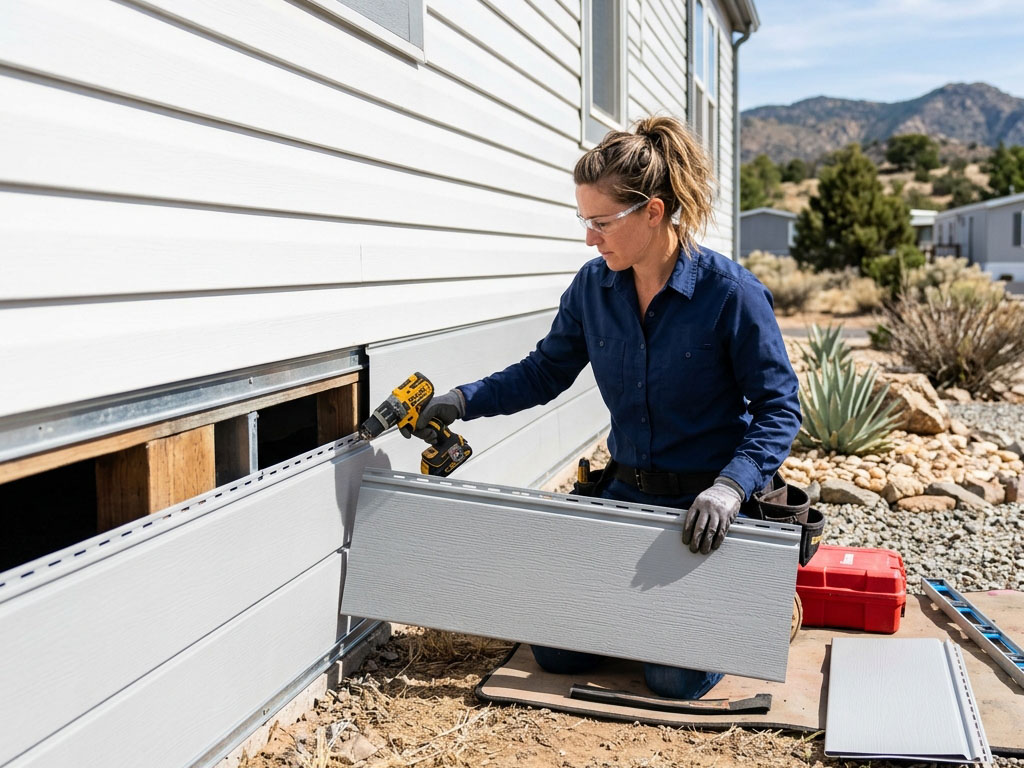
Skirting (also called underpinning) serves as the primary barrier protecting a manufactured home’s crawlspace, water supply lines, and foundation footers from severe weather, winter freezing, and desert wildlife. In Prescott Valley, where winter temperatures drop below freezing and summer monsoons bring intense winds, durable skirting is an essential defense system.
Generic cost estimators overlook manufactured housing realities such as sloped lot grading, frost line pipe protection, and HUD ventilation standards. Our interactive Mobile Home Skirting Cost Calculator bridges this gap. Calibrated specifically for Prescott Valley, Arizona, it models linear perimeter footage, material durability tiers, ground-to-frame clearance, site excavation, and rodent defense packages. Here is how our calculator computes precise skirting replacement costs step-by-step.
Mobile Home Skirting Cost Calculator
ln ft
✓ Level Ground Track Included
✓ HUD Crawlspace Vent Compliant
✓ Freeze & Rodent Protected
Prescott Valley Skirting Spec
Premium Vinyl Skirting Estimate
Estimated Skirting Investment
$2,610
Estimated Range: $2,350 – $2,870
Cost Allocation Distribution
46% Panels • 38% Installation • 16% Prep & Defense
Panels & Ground Track
Craftsmanship Installation
Vents & Rodent Defense
| Project Specification | Itemized Allocation |
|---|---|
| Perimeter Linear Footage | 180 ln ft (Double-Wide) |
| Skirting Panels & J-Channel Hardware | $1,201 |
| Installation, Leveling & Mitering | $992 |
| Ground Prep, Vents & Rodent Barrier | $417 |
| Prescott Valley Freeze Protection | HUD Vents & Rodent Mesh Ready |
Manufactured Housing Specialists • Prescott Valley & Yavapai County Standards
How to Calculate Mobile Home Skirting Costs Step-by-Step
Step 1: Select Your Skirting Material Tier
Material selection dictates longevity, thermal efficiency, and impact resistance:
- Heavy-Duty Premium Vinyl ($14.50 / ln ft): Popular polymer panels with center-vented channels and UV inhibitors to resist high-altitude sun fading.
- Foam-Insulated Thermal Vinyl ($21.00 / ln ft): EPS foam laminated to heavy-gauge vinyl. Thermal insulation protects crawlspace plumbing from freezing and cuts energy bills.
- Corrugated Galvanized Metal ($24.50 / ln ft): Rust-resistant 26-gauge steel panels resisting high winds, weed-trimmer strikes, hail, and rodents.
- Faux Stone / Concrete Panel ($38.00 / ln ft): Composite panels replicating stacked masonry, delivering residential curb appeal while meeting premier park rules.
Step 2: Measure Home Perimeter (Linear Footage)
Total linear perimeter footage directly determines panel quantities and trim requirements:
- Single-Wide Standard (140 – 160 ln ft): Homes (14’x56′ to 16’x66′) requiring 144 to 164 linear feet of continuous skirting panels.
- Double-Wide Standard (170 – 210 ln ft): Homes (24’x56′ to 28’x70′) requiring 160 to 196 linear feet of skirting and corner trim.
- Triple-Wide / Custom (220 – 280+ ln ft): Multi-section layouts with porches or additions requiring 220+ linear feet.
Step 3: Determine Ground-to-Frame Clearance (Average Height)
Panel cutting waste varies with ground-to-frame clearance across Prescott Valley’s sloped terrain:
- Low Clearance (18″ – 24″ / 0.94x Multiplier): Lower stance requiring less panel cutting, providing a 6% material discount.
- Standard Clearance (24″ – 32″ / 1.00x Multiplier): The baseline height for most level mobile home lots in Yavapai County.
- Sloped Grade (32″ – 42″ / 1.18x Multiplier): Uneven lots requiring custom stepped panels to match natural grade slope.
- High Clearance (42″+ / 1.35x Multiplier): Steep drop-offs requiring wood framing, wind bracing, and two-tier panel runs.
Step 4: Factor Ground Preparation & Trenching
A secure bottom track prevents wind blowouts and water intrusion:- Level Ground ($0 Add-on): Flat dirt or gravel pad ready for immediate bottom-channel installation.
- Uneven / Sloped Trench Prep (+$340): Digging a 3″ to 5″ perimeter trench to bury ground tracks against 50 mph monsoon gusts.
- Old Skirting Tear-Out & Disposal (+$450): Tear-out of deteriorated vinyl, tin, or rotted wood with disposal at the local transfer station.
Step 5: Incorporate Ventilation, Access & Pest Defense
Protecting crawlspace air quality and preventing animal infestation:- None ($0): Basic skirting installation without supplemental vents or security doors.
- HUD Standard Automatic Vents (+$220): Bi-metal louvers that automatically open to vent humidity and shut during winter freezes.
- Galvanized Rodent Barrier Mesh (+$310): Galvanized 1/4″ wire mesh buried along bottom channels to block desert pack rats and rodents.
- Heavy-Duty Insulated Access Door (+$250): Weatherproof access hatch providing entry to plumbing valves and water heaters.
- Full Pest Barrier & Auto-Ventilation Pack (+$580): Includes automatic thermal louvers, buried rodent mesh, and an insulated access hatch.
Schedule a Certified On-Site Skirting Estimate
Online calculators provide an accurate preliminary budget. To verify your home’s exact perimeter measurements, ground slope, and crawlspace ventilation needs, schedule your Free On-Site Inspection & Written Quote:
Licensed, Bonded & Insured in Arizona
Frequently Asked Questions
How much does it cost to skirt a double-wide mobile home in Prescott Valley?
Installing new skirting on a standard double-wide (170–200 ln ft) typically ranges from $2,800 to $4,500 for heavy-duty or insulated vinyl. Premium stone packages range between $6,500 and $8,500.
Which skirting material is best for preventing frozen pipes in Arizona winters?
Foam-insulated vinyl skirting is the top choice. The laminated EPS foam core creates a thermal boundary that retains ground warmth in the crawlspace, preventing water line freeze-ups without relying on electric heat tape.
Does manufactured home skirting require ventilation?
Yes. HUD standards mandate a minimum of 1 square foot of ventilation for every 150 square feet of crawlspace floor area. Proper ventilation prevents moisture condensation, rot, and toxic mold growth under the subfloor.
Can weed trimmers damage vinyl mobile home skirting?
Thin vinyl skirting can shatter when struck by weed trimmers. To prevent this, we install heavy-duty polymer bottom tracks or optional galvanized weed-trimmer guards protecting the lower 4 inches of skirting.
How do I calculate the linear footage of my manufactured home?
Measure the exterior perimeter: (Length + Width) × 2. Remember to add linear footage for attached additions, recessed entry steps, or deck cutouts.